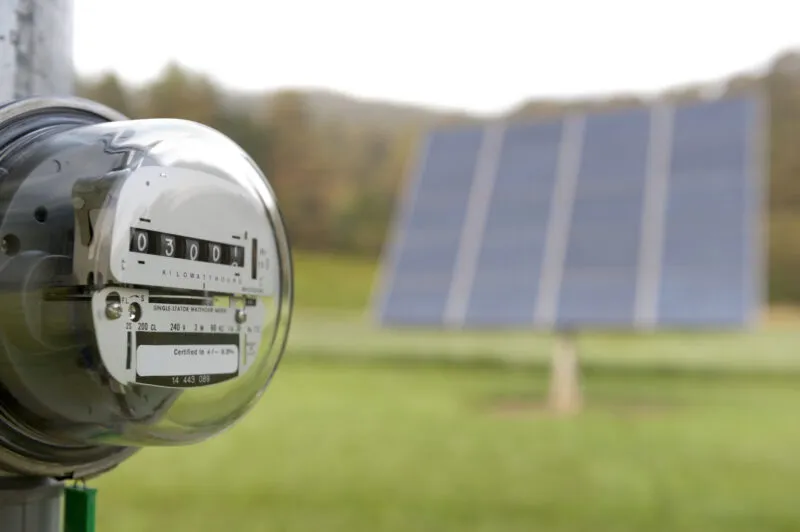
In the canton of Zug, photovoltaic projects are often associated with high-quality buildings, renovations, battery storage, self-consumption, and WWZ network areas. For standard PV, Pronovo is the basis; the city of Zug and renovation combinations may have additional relevance.
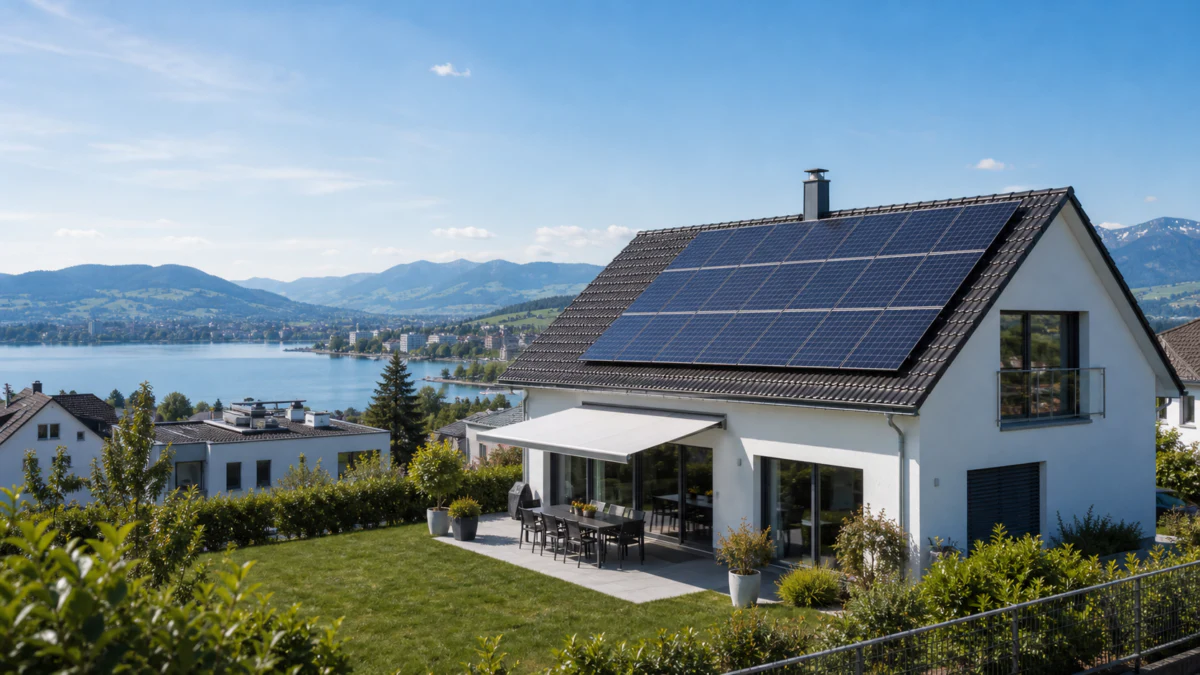
Key points at a glance
For subsidies in the canton of Zug, these points matter most in 2026:
- Pronovo is the national foundation for standard PV.
- The canton of Zug highlights the additional effect close to PV, particularly for building envelopes with full-area PV.
- The City of Zug runs its own programmes for PV, storage and self-consumption technology.
- WWZ is central for grid connection, feed-in and HKN.
- Tax relief for energy-saving measures must be checked according to the Zug tax code.
The specific subsidy always depends on address, system, building condition, grid operator, and deadlines of the respective program.
- As of 11.07.2026
Federal subsidy 2026 at a glance
For photovoltaic systems, there are one-off payments nationwide via Pronovo. The most important instruments are:
- KLEIV - One-off payment for systems with less than 100 kW capacity.
- GREIV - One-off payment for systems of 100 kW or more.
- HEIV - high one-off payment for systems without self-consumption from 2 kW to 149.99 kW.
- Auctions and other instruments - for larger systems without self-consumption, auctions, the sliding market premium or other subsidy instruments may apply depending on the project.
- Additional bonuses - depending on the system, winter electricity, tilt angle, or parking area bonuses may be relevant.
Deadlines are not the same for all instruments. The KLEIV is generally applied for after commissioning. For GREIV, HEIV, auctions as well as cantonal or municipal programmes, other deadlines may apply; they should be checked before ordering or starting construction.
Cantonal subsidies in the canton of Zug
In the canton of Zug, Pronovo is initially relevant for standard photovoltaic systems. Cantonal additional effect arises mainly when the building envelope and full-area PV are combined.
In the city of Zug, own programmes for photovoltaics, PV with green roofs, storage systems, and building technology to increase PV self-consumption may be relevant. These programmes do not automatically apply to the entire canton.
For high-quality renovations, it should therefore be decided early on whether the roof, facade, storage, charging infrastructure and energy management are to be planned together.
Municipal and energy supplier subsidies
In the canton of Zug, WWZ is a central grid operator. The feed-in tariff paid by the grid operator, HKN, self-consumption optimisation, and any local models should be reviewed before the final cost-benefit calculation.
Tax notes in the canton of Zug
The Zug tax book covers tax relief for energy-saving measures. For existing buildings, PV investments can generally be tax-relevant; subsidies reduce the self-borne expense. For new builds, replacement new builds, and value-increasing portions, the distinction is important. There is no uniform 10-kWp tax-free threshold across Switzerland.
Important: Feed-in remuneration, self-consumption and subsidies are treated differently depending on cantonal tax practice. Therefore, larger systems, new builds and special cases should be clarified in advance with the tax office or fiduciary.
Feed-in remuneration and feed-in tariffs in the canton of Zug
Feed-in tariffs paid by the grid operator are not uniform across cantons; the specific grid operator is decisive. From 2026 onwards, if no agreement is reached between the grid operator and the system operator, the quarterly reference market price calculated by the federal government applies. Minimum remuneration rates exist for photovoltaic systems under 150 kW; for systems up to 30 kW, this rate is 6 Rp./kWh. Certificates of origin, local green electricity models and specific grid operator tariffs must be checked separately. Details on the page Feed-in Remuneration Switzerland.
Economically, self-consumption remains central. For apartment buildings, sites, and mixed-use buildings, ZEV, vZEV, and from 2026 local electricity communities (LEG) should be considered. A LEG is not an automatic return guarantee, but a new option that must fit the project technically, legally, and economically.
Permits and insurance in the canton of Zug
Many adapted roof systems are subject to notification. For protected objects, local landscapes, high-quality facade solutions, green roofs or free-standing systems, a specific clarification is required. The building insurance of Zug should be involved for value-increasing PV systems and coverage questions.
In the canton of Zug, Gebäudeversicherung Zug is relevant for building insurance. Owners should clarify whether the photovoltaic system, roof renovation and any battery storage are correctly included in the insured sum and coverage.
Who benefits most from photovoltaics in the canton of Zug?
Typical situations can be categorised for this canton as follows:
| Situation | Assessment |
|---|---|
| Single-family home with a good roof | Often worth checking, EIV + tax deduction have a strong effect |
| Heat pump present or planned | Self-consumption particularly valuable |
| E-car present or planned | Charging times matter, EMS is worthwhile |
| Apartment building / condominium ownership | Check ZEV, vZEV and LEG from 2026 onwards |
| Commercial / Agriculture | Daily consumption often matches well with solar production |
| Small or shaded roof | Get an exact calculation |
What remains decisive is how well roof area, self-consumption, subsidies, and feed-in tariff paid by the grid operator work together.
Checklist before the quote
Before requesting a quote, this information should be available so that the subsidy and cost-effectiveness can be checked properly:
- Address, municipality and grid area determine
- Check roof area, orientation, pitch and shading
- Calculate system size in kWp and expected annual/winter yield
- Check Pronovo instrument: KLEIV, GREIV, HEIV or for large systems auction/GMP
- Zug: Check city of Zug programmes, full-area PV during renovation and social housing
- Check subsidy deadlines for each programme: KLEIV usually after commissioning, local programmes often earlier
- Tax deduction: separate existing building, new build/replacement new build and subsidy contributions
- Check the feed-in tariff paid by the grid operator, HKN and any possible green electricity models with the grid operator
- Realistically calculate self-consumption, battery storage, heat pump, electric car, ZEV/vZEV and LEG
- Clarify permit, protected objects, building insurance and any private additional coverage
With this information, the specialist installer can assess subsidy, self-consumption and technical design significantly more robustly.
solar-guide.ch recommends: In the canton of Zug, photovoltaics should often be planned as a complete system: roof, battery storage, self-consumption, charging infrastructure and tax deduction can together achieve more than an isolated photovoltaic project.
Conclusion
In the canton of Zug, Pronovo is the basis in 2026; additional impact arises particularly in the city of Zug and with renovation combinations involving PV, storage or self-consumption technology.
Via solar-guide.ch, you can have your request forwarded to a maximum of 3 suitable specialist installers. Subsidy, tax, and grid conditions should be checked directly with Pronovo, the canton, the municipality, and the grid operator before placing the final order.
Request quotes free of charge and without obligation
Frequently asked questions and answers
What subsidies for solar systems are available in the canton of Zug in 2026?
Nationally, the one-off payment via Pronovo (KLEIV/GREIV/HEIV) and from 2026 the winter electricity bonus for larger systems. Cantonal programmes focus on building renovation, heating replacement and consulting – specific contributions should be checked based on location.
Are there cantonal contributions in addition to the Pronovo subsidy?
This depends on the current programme. The main contribution for standard PV usually comes via the one-off payment; cantonal and municipal additional contributions are possible in specific cases. Overview: Energiefranken.
Is battery storage subsidised in the canton of Zug?
There is no comprehensive federal or cantonal subsidy for battery storage in 2026. Individual municipalities or energy suppliers may provide contributions – check via Energiefranken.
Are there municipal contributions for photovoltaics?
In some municipalities yes, with very different rates. Amounts and deadlines change; overview on Energiefranken.
Can I deduct a solar system for tax purposes?
For existing buildings, generally yes, as property maintenance. Subsidies received are deducted from the deductible amount. The cantonal tax office provides binding information.
Who helps with the subsidy application?
Your specialist installer usually handles the application to Pronovo on your behalf. Cantonal and municipal applications should be submitted by you or your installer in good time – before construction begins.