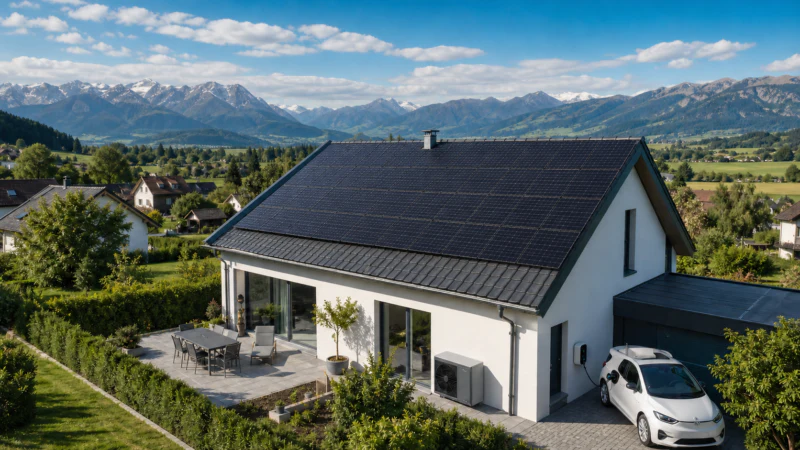
The honest answer is: it depends. The costs of a solar system for a single-family home depend on so many factors that a single guideline price says little. What can be well explained, however, is what the costs consist of and why quotes for the same house differ. That is exactly what this page is about – so that you can better contextualise and compare offers.
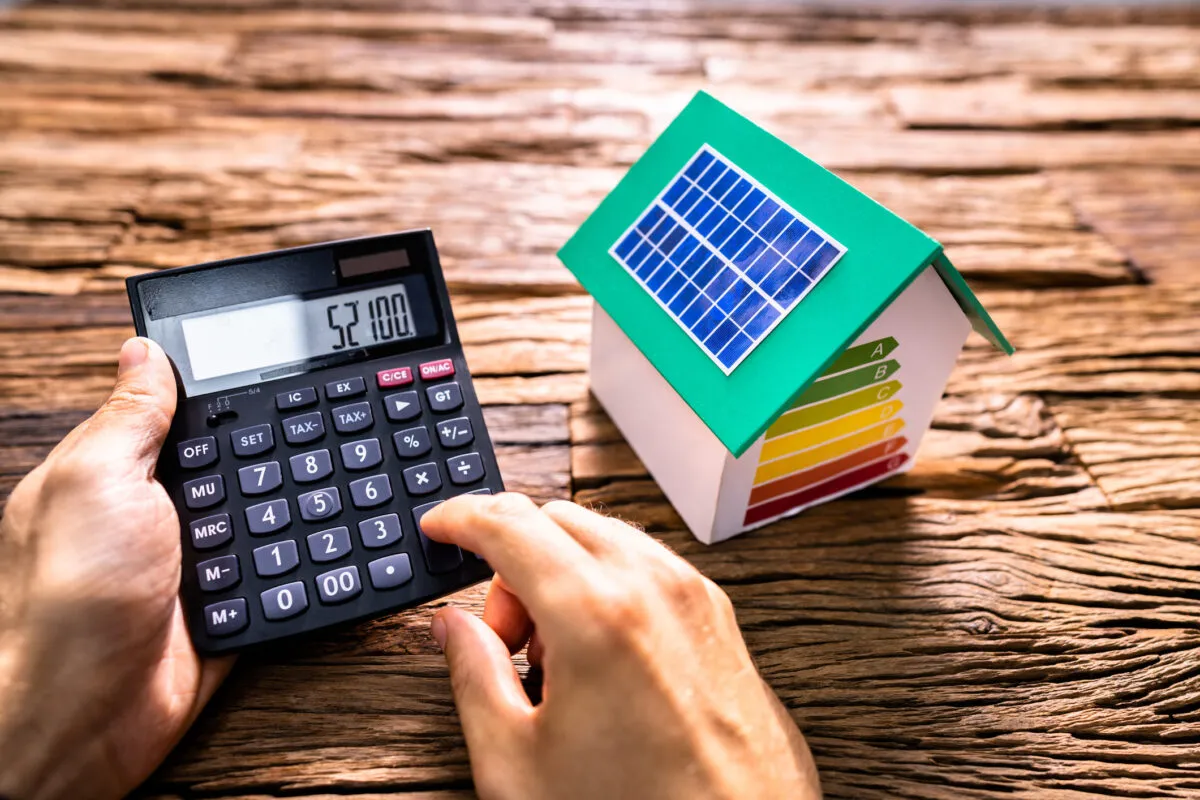
Key points at a glance
The key points of this section can be summarised compactly:
- The costs consist of several blocks: modules, inverter, substructure, scaffolding, electrical work, and planning; plus, depending on the project, battery storage, energy manager, and wallbox.
- A battery storage increases the investment but can increase self-consumption.
- The one-off payment from Pronovo and any cantonal programmes reduce the costs.
- Because the roof, installation and components vary greatly, individual quotes are necessary.
- For a reliable assessment, it is worth comparing several offers.
Therefore, costs can only be seriously classified as a range; the figure becomes reliable only with a roof inspection and a concrete quote.
- As of 11.07.2026
Which factors determine the costs?
Two single-family homes with the same consumption can end up with systems of different costs. Key factors include:
- Roof size and system output – more area means more modules.
- Roof shape and roof condition – tiles, metal, or flat roof, condition of the covering.
- Orientation and tilt – affect yield and design.
- Mounting type – attached, integrated or on a flat roof.
- Scaffolding and accessibility – height, surroundings, and safety.
- Electrical installation – condition of the distribution board, meter and grid connection.
- Additional components – battery storage, energy management system, wallbox.
For a reliable assessment, these points should always be considered together with location, consumption and specific quote.
What cost blocks make up a solar system?
The most important influencing factors are compared in the following overview:
| Cost block | What lies behind it |
|---|---|
| Modules | The actual solar panels; the number depends on the roof area and target output |
| Inverter | Converts DC to AC; size and type vary |
| Mounting structure | Mounting system, depending on roof type |
| Scaffolding | For secure installation; effort varies depending on the building |
| Electrical work | Cabling, connection, adjustments to the distribution board |
| Planning | Design, registration, coordination |
| Storage | Optional; increases self-consumption and investment |
| Energy manager | Controls consumption and generation |
| Wallbox | Optional, for charging an electric car |
For a reliable assessment, these points should always be considered together with location, consumption and specific quote.
Why do quotes vary so much?
Because each of these blocks is project-specific. An additional scaffold, an older electrical distribution board, a different module type or a larger storage capacity noticeably shift the price. The chosen components, warranties and service scope also differ between providers. A lower price is therefore not automatically the better offer – what matters is the ratio of performance to price.
Should the solar system be planned with or without storage?
A storage unit shifts solar power from day to evening, thereby increasing self-consumption. However, it also increases the investment. Whether it is worthwhile depends on your consumption profile:
| Without storage | With storage | |
|---|---|---|
| Investment | Deeper | Higher |
| Self-consumption | Limited to the daily consumption | Higher, as evening use is possible |
| Makes sense with | high daily consumption | High evening/night consumption, heat pump, electric car |
| Retrofit | – | Possible later, planning makes it easier |
More on this on the pages PV system with storage and photovoltaic system with storage.
How do subsidy and tax deduction affect the costs?
The one-off payment from Pronovo reduces the investment as a single contribution. For systems of single-family homes, the one-off payment for small systems (KLEIV) is generally relevant. Additionally, cantonal and municipal programs may apply, and in many cantons, the investment costs can be claimed for tax purposes. The tax treatment varies by canton – clarify this with your tax authority. Details on the subsidy can be found on the page Pronovo Förderung.
How do self-consumption and feed-in remuneration affect cost-effectiveness?
How quickly a system pays for itself depends heavily on how much electricity you consume yourself. Self-consumed electricity replaces more expensive grid electricity; for electricity fed into the grid, you receive a tendentially lower remuneration. You can read how this works on the page Feed-in Remuneration Switzerland.
What does a simple calculation example look like?
The following example is intended solely to illustrate the logic and is not a price quote. Assume that a single-family home is fitted with a system of around 10 kW capacity. The investment is distributed across modules, inverter, mounting structure, scaffolding, electrical work, and planning. An optional battery storage unit increases the total. The one-off payment is deducted from the investment; any cantonal contributions and tax deductions further reduce the costs. A quote based on your building data will show what the individual items actually amount to.
Which points should be included in the quote comparison?
When comparing, the positions that directly influence price, quality and future additional costs should mainly be visible:
| Point | Why it matters |
|---|---|
| System capacity (kWp) and number of modules | Basis for yield and price |
| Module type, inverter, storage | Determine quality and costs |
| Scaffolding and electrical work included? | Frequent source of price differences |
| Warranties and service | Compare scope and duration |
| Subsidy taken into account? | One-off payment and regional programmes |
| Grid connection and registration | Who covers what? |
| Total price incl. VAT. | For a fair comparison |
This makes it easier to see quickly whether a quote is complete, comparable and plausibly structured.
solar-guide.ch recommends: Compare quotes item by item, not just based on the final price. Ensure that scaffolding, electrical work, any storage system, and registration are covered equally in all cases – only then are two offers truly comparable. A lower price with a smaller scope of services is not a cheaper offer.
Conclusion
What a solar system costs for a single-family home can only be answered seriously with specific building data. Knowing the cost blocks allows you to compare quotes better and understand why offers differ. Comparing several individual quotes provides the most reliable basis.
The costs of a solar system can only be seriously estimated with specific building data. Through solar-guide.ch, you can compare up to three individual quotes from suitable specialist installers in your region free of charge and without obligation.
Request quotes free of charge and without obligation
Frequently asked questions and answers
What does a solar system for a single-family home cost?
This depends on roof size, components, electrical work and any battery storage. A reliable price only emerges with specific building data and individual quotes.
Why do quotes differ?
Because roof, mounting, scaffolding, electrical installation, components and storage size are project-specific – and because providers calculate different services and warranties.
Is a solar system with storage more expensive?
Yes, battery storage increases the investment. However, it can increase self-consumption. Whether this is worthwhile for you depends on your consumption profile.
Which subsidy reduces the costs?
The one-off payment from Pronovo as well as any cantonal and municipal programmes. In many cantons, tax deductions are also possible.
How do I recognise a complete quote?
It specifies system output, components, included work (incl. scaffolding and electrical work), warranties, subsidy and the total price including VAT.
Average: 5 out of 5 stars (2 ratings)