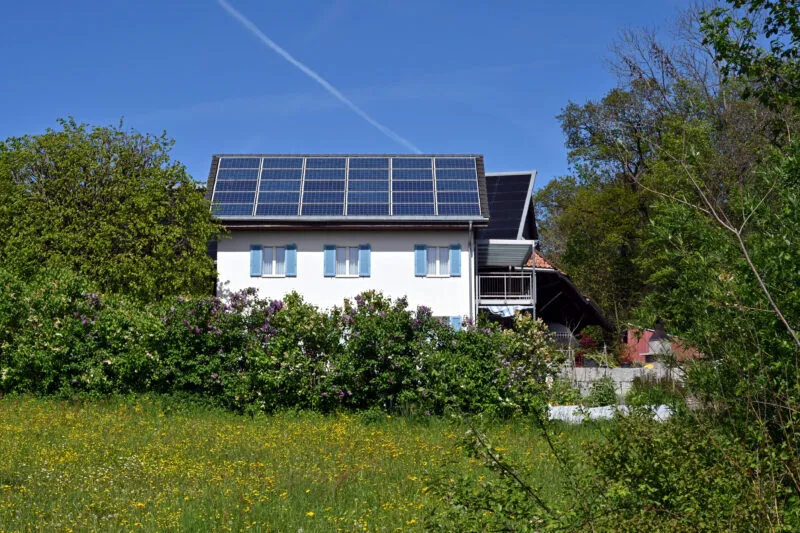
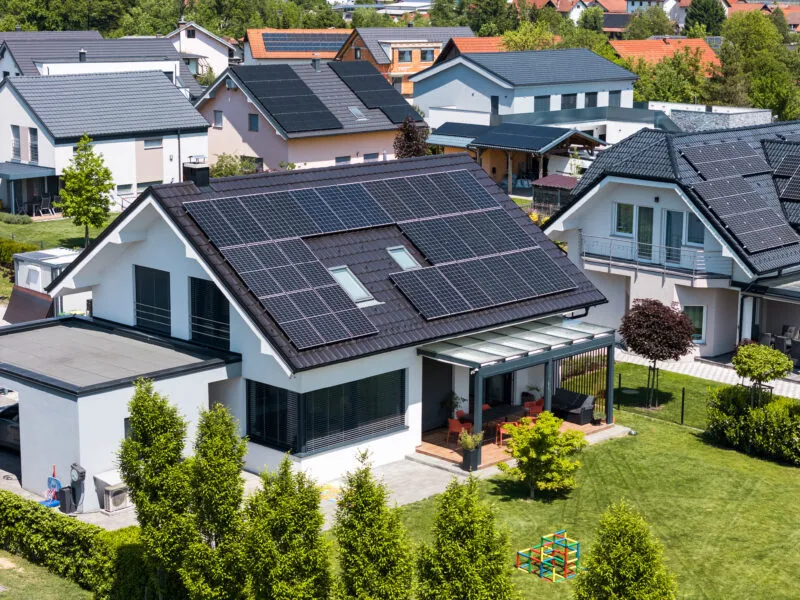
Solar collectors use the sun to generate heat – not electricity. They are therefore something different from photovoltaic modules and are mainly used for hot water and heating support. This page explains how solar collectors work, where solar thermal is worthwhile and when photovoltaics is the better choice.

Key points at a glance
The key points of this section can be summarised compactly:
- Solar collectors generate heat, not electricity.
- Photovoltaic modules generate electricity.
- Solar thermal energy is mainly sensible for hot water and heating support.
- Photovoltaics are more flexible because electricity can be used in various ways (household, heat pump, electric car).
- Which solution is suitable depends on the building, heating system, hot water demand and roof area.
The central distinction is therefore: solar thermal collectors deliver heat, photovoltaics deliver electricity. This results in different areas of application and economic considerations.
- As of 13.07.2026
What are solar collectors?
Solar collectors – often also called solar thermal systems – convert sunlight into heat. A solar fluid circulates in the collectors, absorbing the heat and transferring it to the heating or hot water system via a heat exchanger. A hot water storage tank holds the heat until it is needed in the house.
Typical areas of application are hot water preparation and heating support, particularly during the transitional period. As a sole heat source for heating, solar collectors generally do not provide sufficient output at our latitudes.
Solar thermal collectors or photovoltaics: What is the difference?
Both technologies use the sun, but lead to different results:
| Topic | Solar collectors (solar thermal) | Photovoltaics |
|---|---|---|
| Generated | Heat | Electricity |
| Use | Hot water, heating support | Household, heat pump, electric car, feed-in |
| Storage | Hot water storage tank | Battery storage (optional) |
| Flexibility | Rather purpose-specific | Versatile |
| Typical initial question | Heat demand | Electricity demand |
In short: solar collectors solve a heat problem, photovoltaics an electricity problem. Both can be sensible – depending on where you have the greatest need in the house.
What types of solar collectors are there?
The following list summarises the key points on What types of solar collectors are there?:
- Flat-plate collectors – the most common design. Robust, cost-effective, and well suited for hot water and heating support.
- Tube collectors (vacuum tubes) – higher yields per area, especially during cooler periods. Higher price.
- Hybrid collectors (PVT) – Combination of photovoltaics and solar thermal energy in one module. A niche product for special application cases.
Which type is suitable depends primarily on the heat requirement, the available roof area, and the existing heating system.
What are solar collectors suitable for?
Solar thermal collectors are mainly interesting where a lot of heat is required regularly:
- Single-family home with high hot water demand, especially in households with multiple people.
- Apartment building with central hot water supply.
- Commercial operations with a constant hot water demand – such as the catering industry, hotels or laundries.
- Sports facilities with shower operation.
- Heating support in well-insulated buildings with low supply temperatures.
The more constant the hot water demand is, the better solar thermal energy can be utilised in practice.
When is photovoltaics more sensible?
Photovoltaics is usually the stronger solution when not only heat, but energy in general is to be used in the building:
- When electricity demand is the priority.
- If a heat pump takes over the heating – it can be operated with solar power and often makes separate solar thermal systems redundant.
- If an electric car is to be charged.
- If self-consumption optimization and a battery storage unit are the goal.
- If the roof area is to be used flexibly and multiple consumers are supplied.
In many modern new builds and renovations with a heat pump, the combination photovoltaics + heat pump is more attractive than classic solar thermal – because it covers both heat (indirectly) and electricity for the rest of the household.
Can solar thermal collectors and photovoltaics be combined?
Yes, technically this is possible. However, both systems occupy roof area and tie up investment capital. Therefore, questions such as these should be clarified before a combination:
- Is the roof area sufficient for both systems without one being poorly oriented?
- How high is the hot water demand – does it justify a dedicated solar thermal system?
- Would a larger photovoltaic system plus heat pump be the simpler solution?
- How much longer will the existing heat generators run?
Often, the combination PV + heat pump is the pragmatic alternative to the combination PV + solar thermal – especially if a heating renovation is due anyway.
Subsidy for solar collectors
Whether and how solar collectors are subsidized depends on the canton, municipality, and energy supplier, and is often addressed within building or renovation programs. A good starting point for a location-specific overview is the Energiefranken platform, which bundles subsidy programs from the federal government, cantons, municipalities, and energy suppliers. Further information on subsidies in the photovoltaic area: Pronovo Förderung and the overview Förderungen für Photovoltaikanlagen in der Schweiz.
solar-guide.ch recommends: First clarify whether you primarily want to solve a heat or an electricity problem. In modern buildings with a heat pump, a sufficiently sized photovoltaic system is often the more versatile investment, because it covers household, heat and mobility together. Solar collectors remain strong if a high, constant demand for hot water is central.
Conclusion
Solar thermal collectors are a proven solution for hot water and heating support – where heat demand is the priority. Photovoltaics are more flexible and are particularly well suited to heat pumps, electric cars, and self-consumption. Which solution – or which combination – makes sense depends on individual circumstances.
Are you unsure whether photovoltaics, solar collectors, or a combination make sense? Through solar-guide.ch, you can request quotes from suitable specialist installers in your region and compare individual recommendations – free of charge and without obligation.
Request quotes free of charge and without obligation
Frequently asked questions and answers
What is the difference between solar collectors and photovoltaics?
Solar collectors generate heat, photovoltaics generate electricity. Solar thermal is mainly used for hot water and heating support, photovoltaics for the household’s electricity needs as well as for the heat pump and electric car.
Do solar collectors generate electricity?
No. Solar collectors exclusively generate heat. Photovoltaic modules are required for electricity.
Are solar thermal collectors for hot water worthwhile?
In households with high, uniform hot water demand, solar collectors can be a good investment. In modern buildings with a heat pump, a photovoltaic system is often the more versatile alternative.
Can solar thermal be combined with photovoltaics?
Technically yes. In practice, both systems compete for roof area and budget. Often, the combination of photovoltaics + heat pump is the simpler and more flexible solution.
Which is better: solar thermal or photovoltaics?
It is not possible to give a blanket answer. Solar thermal systems are highly effective when there is a high demand for hot water; photovoltaic systems are more versatile and better suited to heat pumps and electric cars. Which solution is appropriate depends on the building, heating system, hot water demand, and roof area.
Average: 5 out of 5 stars (2 ratings)