The inverter is the least conspicuous component of a photovoltaic system – and one of the most important. Solar modules generate direct current; the household and the grid need alternating current. The inverter handles this conversion and controls the entire system: it monitors the yield, optimises the performance, and ensures grid compliance. This page explains the types, the correct sizing, and what you should look for in the quote.
Key points at a glance
The following points summarize the most important information:
- Inverters convert the direct current of the solar modules into usable alternating current.
- The selection influences yield, monitoring, storage capacity and scalability.
- String inverters are the most common type in classic residential systems.
- Hybrid inverters are relevant if battery storage is planned – today or later.
- Microinverters or power optimizers can be useful in cases of shading.
- Costs must always be considered in the context of the entire PV quote.
This makes the direction clear: The specific subsidy always depends on address, system size, building type and grid operator.
- As of 11.07.2026
- Sources at the end of the article
What does an inverter do in a photovoltaic system?
The modules on the roof supply direct current (DC). Your appliances and the public grid operate with alternating current (AC). The inverter sits in between and performs four tasks:
- Convert: Direct current is converted into grid-compliant alternating current.
- Optimisation: Through so-called MPP tracking, the inverter continuously extracts the maximum possible power from the modules.
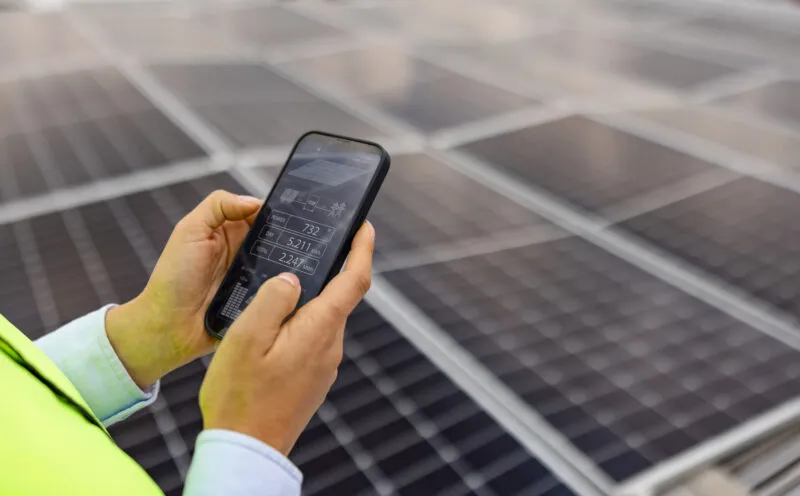
- Monitoring: Yield, consumption and errors are recorded and usually made visible via an app or portal.
- Grid protection: In case of grid disturbances, the inverter automatically disconnects from the grid – a safety requirement of the grid operator.
If a central inverter or string inverter fails, the affected system or part of the system is usually shut down. In contrast, with microinverters, a failure may be limited to individual modules. Quality and appropriate design therefore pay off over the entire service life.
What types of PV inverters are there?
The following table assigns the key points to What types of PV inverters are there?:
| Type | Typical application | Advantage | Disadvantage |
|---|---|---|---|
| string inverter | Conventional roof system | Proven, efficient, good value for money | Less flexible with partial shading |
| hybrid inverter | PV with battery storage | Storage can be integrated directly, one device for both | Not always necessary, higher price |
| Microinverter | Individual modules, small systems | Good in case of shading, module-by-module monitoring | Higher complexity and costs per kWp |
| Inverter with power optimisers | Complex, partially shaded roofs | Optimisation per module possible | Additional components on the roof |
For most single-family homes with an unshaded roof, a string inverter is the right solution. With chimneys, dormers or trees casting shadows, it is worth looking at optimisers or microinverters – and those planning a storage system should check the hybrid inverter.
How is an inverter correctly dimensioned?
The inverter’s output must match the system – but not on a 1:1 basis. Because modules rarely sustain their rated power in everyday use, the inverter is often sized slightly smaller than the total module capacity. The appropriate sizing depends, however, on roof orientation, shading, system size, self-consumption and grid connection.
What goes into the sizing:
- Roof orientation: East-west systems distribute production over the day; the inverter can be relatively smaller than with a purely south-facing system.
- Shading: Partially shaded areas speak in favour of optimisers or multiple MPP trackers.
- Battery storage: Planned or conceivable? Then clarify hybrid capability or retrofitability.
- Later expansion: Plan for reserves if the roof still has space.
- Wallbox and heat pump: Influence self-consumption and energy management – the inverter should be able to communicate with the planned system.
- Grid connection: The grid operator specifies the amount of power that may be fed in; larger systems may require a limitation or remote control.
The specific design is the task of the specialist installer – a good quote presents it in a comprehensible manner.
What does an inverter cost?
The inverter typically accounts for a single-digit to low double-digit percentage of the total investment. Isolated device prices say little, as costs depend on:
- Output and number of MPP trackers
- Manufacturer and quality segment
- Hybrid capability (storage connection)
- Monitoring scope
- Installation effort and placement
More important than the unit price: The quote should clearly state which model is being used – including output, warranty and compatibility. Do not compare device prices, but complete packages with the same scope of performance. You can read how the total costs of a system are made up on the page What does a photovoltaic system cost.
How do inverters and battery storage work together?
Anyone planning a storage system has two basic concepts:
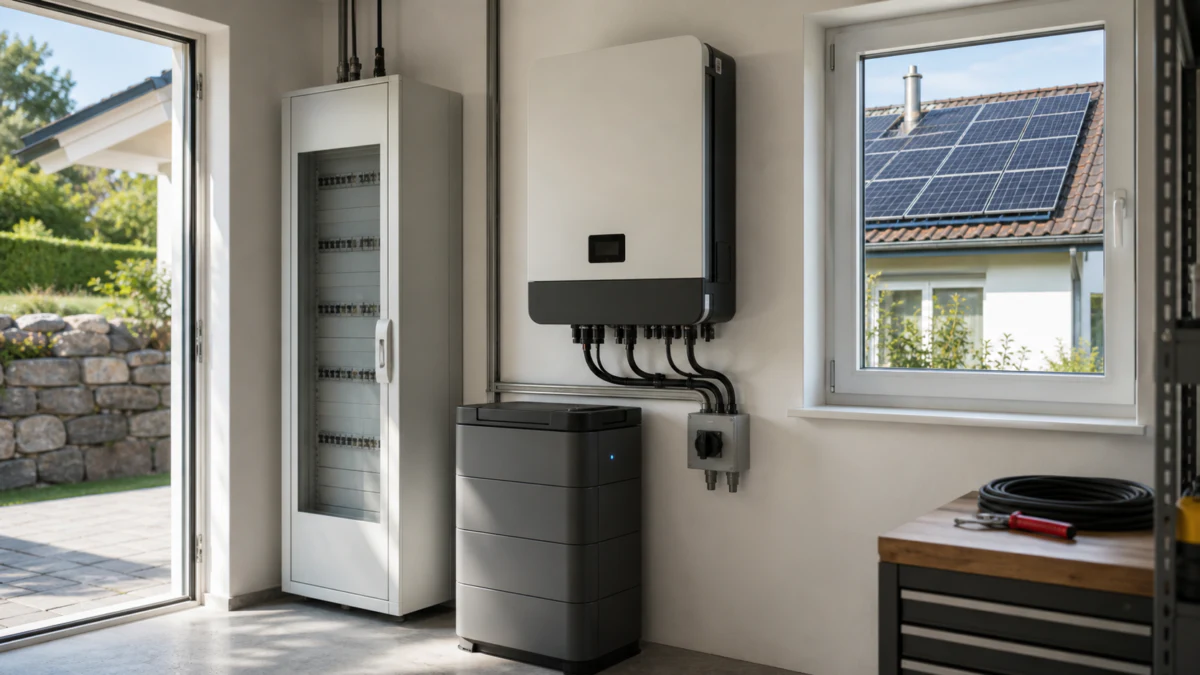
- DC-coupled (hybrid inverter): The battery storage is connected directly to the inverter, and the electricity is converted only once. Efficient and tidy – ideal if the system and storage are planned together.
- AC-coupled: The storage has its own battery inverter and is connected to the house network. More flexible for retrofitting, as the existing inverter can remain.
For both: Backup power or emergency power is not automatically included. Anyone who wants to continue having electricity during a power outage must plan for this explicitly and request a quote. Details on storage size and costs: Photovoltaic system with battery storage.
How does monitoring support the operation of a PV system?
Modern inverters provide the data basis for operation:
- Yield monitoring in real time and over time
- App or web portal for an overview
- Fault detection with notification – important so that outages do not go unnoticed for weeks
- Consumption data, if a smart meter is connected
- Self-consumption optimization by controlling a wallbox, boiler, or heat pump
Ask in the quote what the monitoring covers and whether ongoing costs apply for it.
What should you look for in the quote?
Before requesting a quote, this information should be available so that the subsidy and cost-effectiveness can be checked properly:
- Manufacturer and model specified?
- Is the capacity appropriately sized for the PV system?
- Is hybrid capability needed – today or later?
- Is storage compatibility documented?
- Does it include a backup power function or not?
- Monitoring included (app/portal, costs)?
- Warranty and service conditions?
- Expandability (second string, larger system)?
- Grid operator requirements taken into account?
With this information, the specialist installer can assess subsidy, self-consumption and technical design significantly more robustly.
Which errors frequently occur with the inverter?
The following list summarises the most important points regarding Which errors frequently occur with inverters?:
- Selecting the inverter based on price alone.
- Plan a storage system for later use, but do not choose an inverter that is hybrid-capable or can be retrofitted.
- Ignoring shading and forgoing optimizers where they would be necessary.
- Accept backup power, even though it is not included.
- Accept quotes without a clear model designation.
- Not considering later expansion (wallbox, heat pump, more modules).
For the binding assessment, the specific situation of the building and the practice of the responsible authority ultimately count.
solar-guide.ch recommends: Decide on the storage question before you fix the inverter. If you consider a battery storage possible in the coming years, choose a hybrid inverter or clarify AC retrofitting – this is cheaper than a later device replacement. And insist on the clear model designation in every quote: Without manufacturer, type and warranty details, offers cannot be compared seriously.
What is ultimately decisive for the inverter?
The inverter helps determine the yield, safety, storage capability, and comfort of a photovoltaic system. For standard roofs, the string inverter is proven; in cases of shading, optimisers or microinverters help; and those planning a storage system should consider the hybrid inverter. The appropriate design belongs in the hands of the specialist installer – and the clear model specification in every quote.
Are you planning a photovoltaic system and would like to know which components make sense? Through solar-guide.ch, you can submit your request free of charge and without obligation. Your request will be forwarded to a maximum of three suitable specialist installers from your region.
Request quotes free of charge and without obligation
Frequently asked questions and answers
What does an inverter do in photovoltaics?
It converts the direct current from the modules into grid-compliant alternating current, continuously optimises performance, monitors the system, and automatically disconnects it from the grid during grid disturbances.
What types of inverters are there?
String inverters (standard for residential systems), hybrid inverters (with battery storage connection), microinverters (per module), and systems with power optimizers (for partially shaded roofs).
What is a hybrid inverter?
An inverter with an integrated connection for battery storage. PV power and storage run through a single device – efficient when the system and storage are planned together.
How long does an inverter last?
Typically 10 to 15 years, and thus shorter than the modules. A replacement during the system’s lifetime should be planned for; warranty extensions can be sensible.
Is backup power automatically included?
No. Without a special backup power or emergency power function, the system shuts down in the event of a grid failure. Anyone who wants backup power must explicitly plan for it and request a quote.
What should I look for in the quote?
Focus on the clear model designation with output, warranty, storage compatibility and monitoring scope – and ensure that the design suits the roof, consumption and planned extensions. Details: photovoltaic system quote.
Sources and further information
The following official bodies provide further information:
- Swissolar: Components of a photovoltaic system
- Swissolar: System monitoring for photovoltaic systems
Average: 4.7 out of 5 stars (12 ratings)