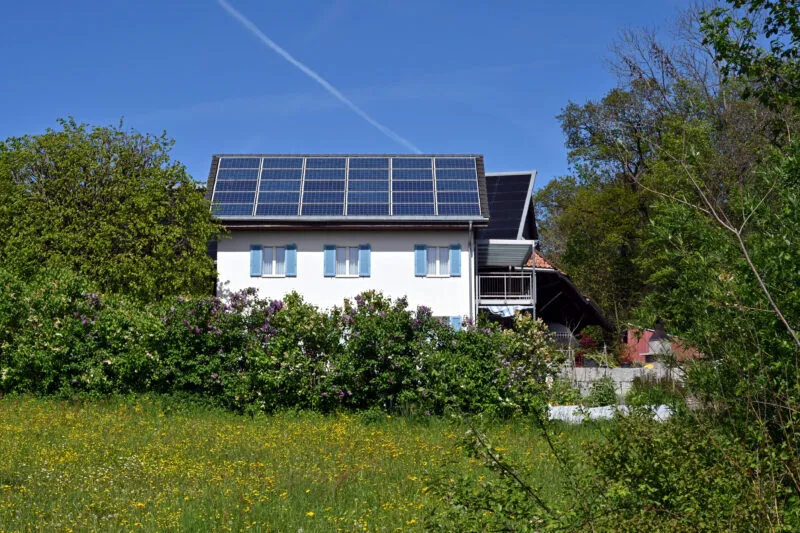
Solar power is electricity generated from solar energy – produced on your own roof and used directly on site. This sounds simple, and it essentially is: sunlight hits the modules, an inverter converts it into household electricity, which then goes either to your outlets, into a battery storage system, or into the public grid. This page explains the basics and guides you to the relevant detail pages.
Key points at a glance
The key points of this section can be summarised compactly:
- Solar electricity is generated using photovoltaic modules.
- An inverter converts this into usable household electricity.
- Solar electricity can be consumed directly, stored or fed into the grid.
- Self-consumption is usually particularly important for economic viability.
- Battery storage, heat pump, electric car, and ZEV can improve utilization.
In everyday life, what matters most is how much of the generated electricity can be used directly in the building. System size, storage, and other consumers are oriented around this.
- As of 11.07.2026
What is solar power?
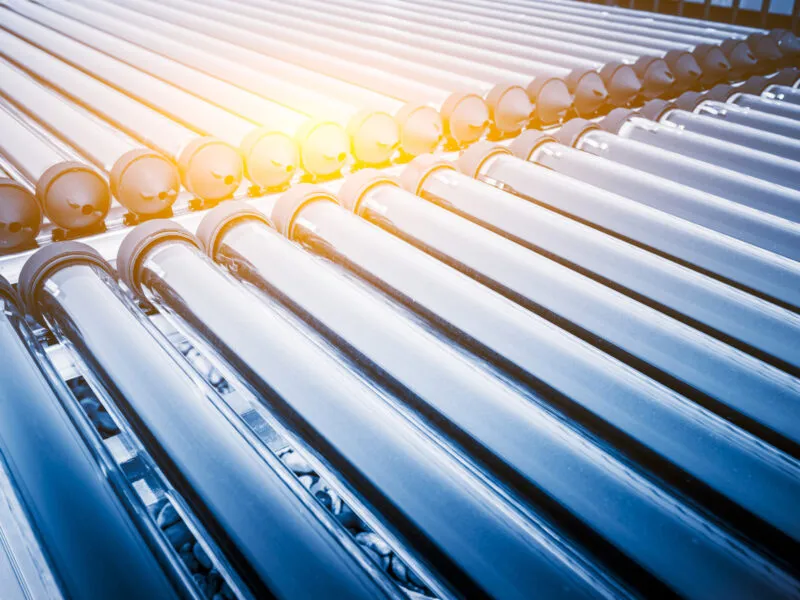
Solar electricity is electrical energy generated from sunlight. It is produced in photovoltaic modules. Do not confuse it with solar heat: solar collectors (solar thermal) generate heat for hot water and heating, not electricity. When people refer to a 'solar system' in everyday life, they usually mean photovoltaics – that is, solar electricity. For distinction: solar collectors.
How is solar power generated?
The following list summarises the key points on How is solar electricity generated?:
- Photovoltaic modules on the roof convert light into direct current.
- The inverter converts direct current into alternating current, as used by your appliances and the grid.
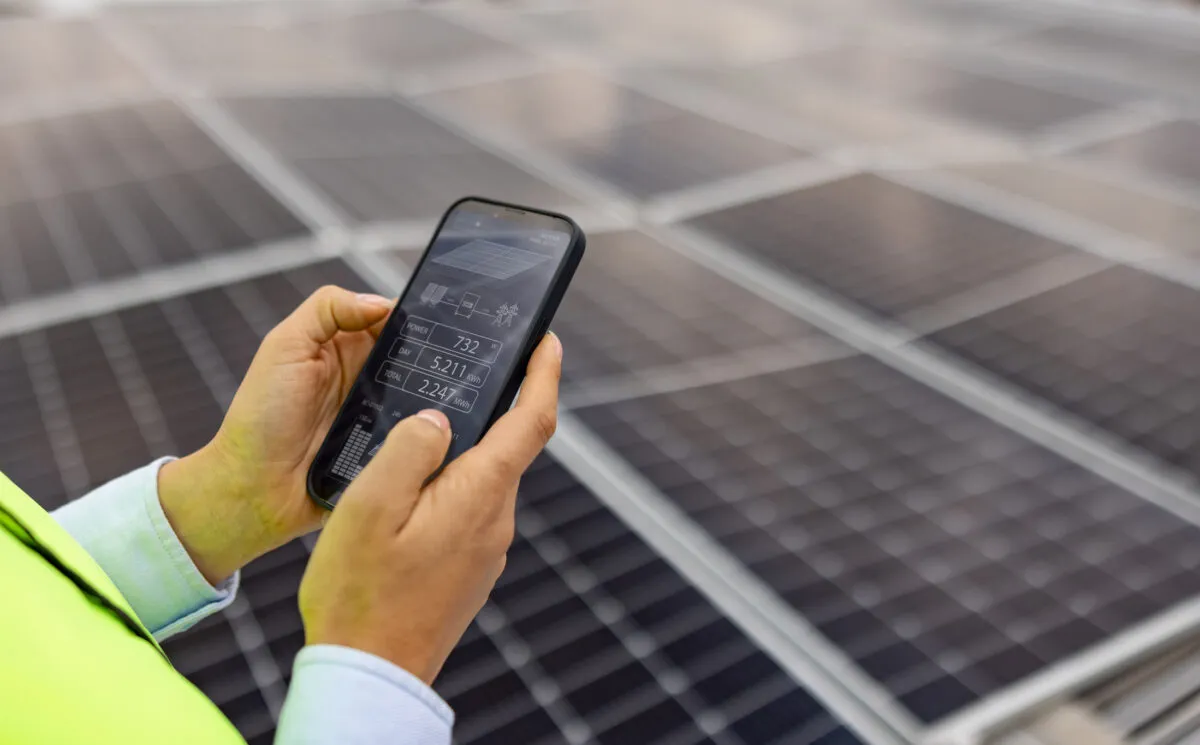
- The electricity meter measures what is generated, what is consumed and what is fed in.
- The electricity flows into household consumption, into a battery storage or – in case of surplus – into the public grid.
How this works in detail and when which system size is suitable can be read on the page Photovoltaic system Switzerland.
How can solar electricity be used in the house?
Solar power can be used for anything that runs on electricity. It is particularly valuable where it directly replaces more expensive grid electricity:
- Household appliances (refrigerator, washing machine, lighting)
- Heat pump for heating and hot water
- Boiler and hot water storage
- Electric car via the wallbox
- Battery storage for use in the evening
- General electricity in an apartment building (staircase, lift, underground garage)
The more of these consumers match the solar yield in terms of timing, the higher the self-consumption will be.
What happens to surplus solar electricity?
If the system produces more than you are currently consuming, the surplus is fed into the public grid. For this, you receive a remuneration. In addition, the ecological value of the electricity can be compensated through certificates of origin. The difference between self-consumption and feed-in is important: Self-used electricity replaces more expensive grid electricity, while fed-in electricity tends to be remunerated at a lower rate. Details can be found on the page Feed-in remuneration Switzerland.
store solar power
A battery storage unit shifts electricity generated during the day to the evening, increasing self-consumption. Whether this is worthwhile depends on the consumption profile: those who consume a lot in the evening or at night, operate a heat pump, or charge an electric car are more likely to benefit. However, a storage unit is not automatically cost-effective. The fundamental decision-making question is clarified on the page PV system with storage; costs and size are covered on the page photovoltaic system with storage.
Share solar power collectively
Where several parties are involved – in an apartment building, under condominium ownership or on a site – solar electricity can be used jointly. The association for self-consumption (ZEV) and the virtual ZEV (vZEV), possible since 2025, are the tools for this; since 2026 there is additionally the local electricity community (LEG). Details on the page Association for self-consumption (ZEV).
What affects solar power yield?
The following table assigns the key points to What influences the solar power yield?:
| Factor | Influence |
|---|---|
| Roof area | Possible system size |
| Orientation | Daily and annual yield |
| Tilt | Seasonal yield |
| Shading | Yield losses, sometimes significant |
| Location | Solar irradiation, altitude |
| Components | Efficiency of modules and inverter |
| Consumption profile | Share of self-consumption |
A first site-specific estimate is provided by the page Calculate solar system.
Advantages of solar power
The most important benefits are seen where solar power directly replaces grid electricity or new electrical consumers are sensibly integrated:
- Less grid electricity consumption and therefore more control over electricity costs.
- Contribution to the energy transition, as it is generated from renewable sources.
- Use of existing roof areas without additional land consumption.
- Good combination with e-mobility and heat pump.
- Long service life of the systems.
Solar electricity is particularly strong when generation and consumption are well matched.
Limits of solar power
Despite these advantages, a photovoltaic system should be planned realistically, as solar power also has clear limitations:
- Depends on time of day and weather.
- Winter yield significantly lower than in summer.
- Investment and planning are required.
- Not every roof is equally suitable.
- High levels of self-sufficiency require storage or complementary measures.
These limits do not speak against photovoltaics, but they show why self-consumption, storage, and consumption profile should be considered together.
solar-guide.ch recommends: Plan your solar power based on consumption: What do you need today, and what in five years (heat pump, electric car, additional consumers)? Those who use as much electricity as possible themselves get the most out of the system – the size and any storage are determined by this, not by the maximum roof area.
Conclusion
Solar electricity is a mature, everyday-usable technology. It becomes economically most attractive when you use it yourself as much as possible – directly, via battery storage or collectively in a ZEV. Which combination suits you best is best determined by specific planning and the comparison of individual quotes.
You want to produce your own solar power? Through solar-guide.ch, you can submit your request free of charge and without obligation. Your request will be forwarded to a maximum of three suitable specialist installers from your region.
Request quotes free of charge and without obligation
Frequently asked questions and answers
What is solar power?
Solar electricity is electricity generated from solar energy. It is produced in photovoltaic modules and made usable for household use via an inverter.
How does rooftop solar power work?
The modules convert light into direct current, which the inverter turns into household electricity. This is used directly, stored, or fed into the grid.
Can I store solar power?
Yes, with battery storage. Whether this is economically sensible depends on the consumption profile. Details on the page PV system with storage.
What happens to surplus solar electricity?
It is fed into the public grid and remunerated. You can read how the remuneration works on the page Feed-in remuneration Switzerland.
Is solar power enough for an entire house?
Solar power can cover a large part of annual consumption. Complete autarky is rarely the most economical goal, as it would require a very large battery storage system. In most cases, high self-consumption is the better target metric.
What is the difference between solar electricity and solar heat?
Solar power is generated in photovoltaic modules and is electrical. Solar heat is generated in solar collectors and is used for hot water and heating. Details under solar collectors.
Average: 5 out of 5 stars (1 rating)