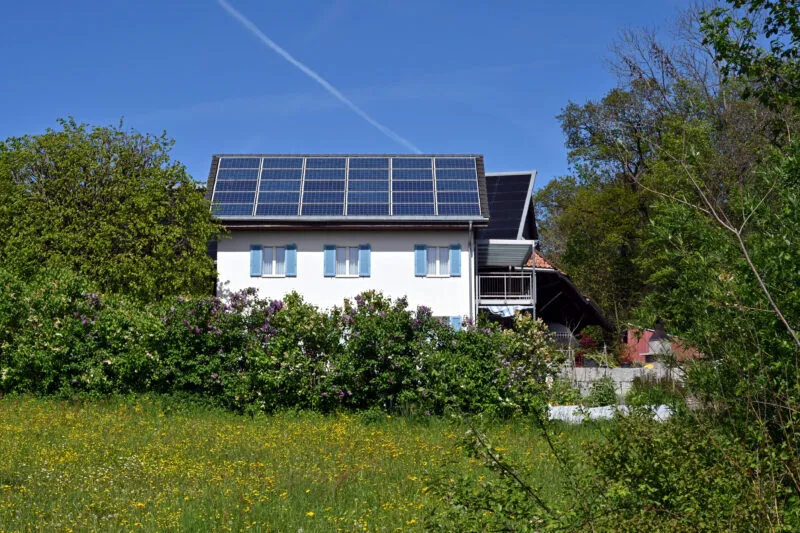
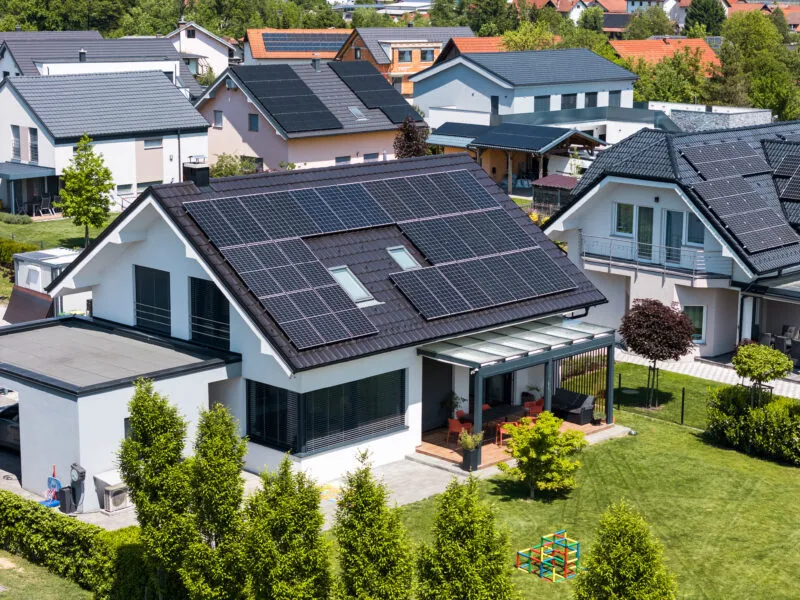
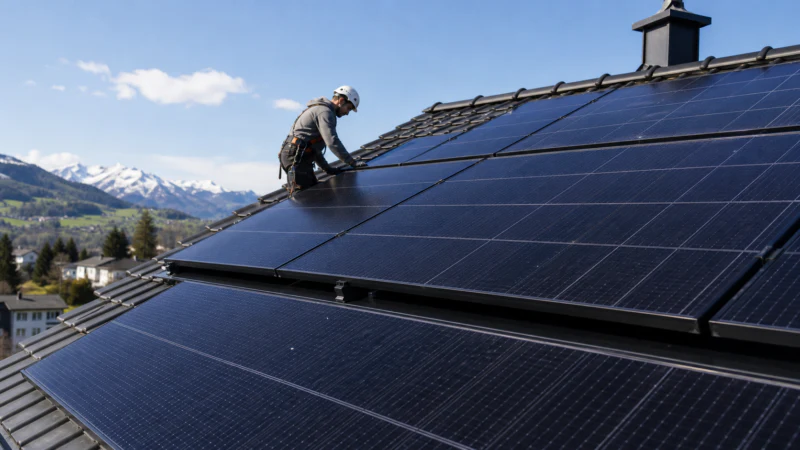
Switching to solar energy through a photovoltaic system is already a big step towards sustainable energy supply. However, there are numerous extensions that can make your solar system even more efficient and versatile. With additional components, you can further increase self-consumption, make your home smarter and more independent, and even integrate other areas of your energy supply. In this article, we introduce five sensible extensions that can optimally complement your photovoltaic system.

1. Battery storage – Use energy at night too
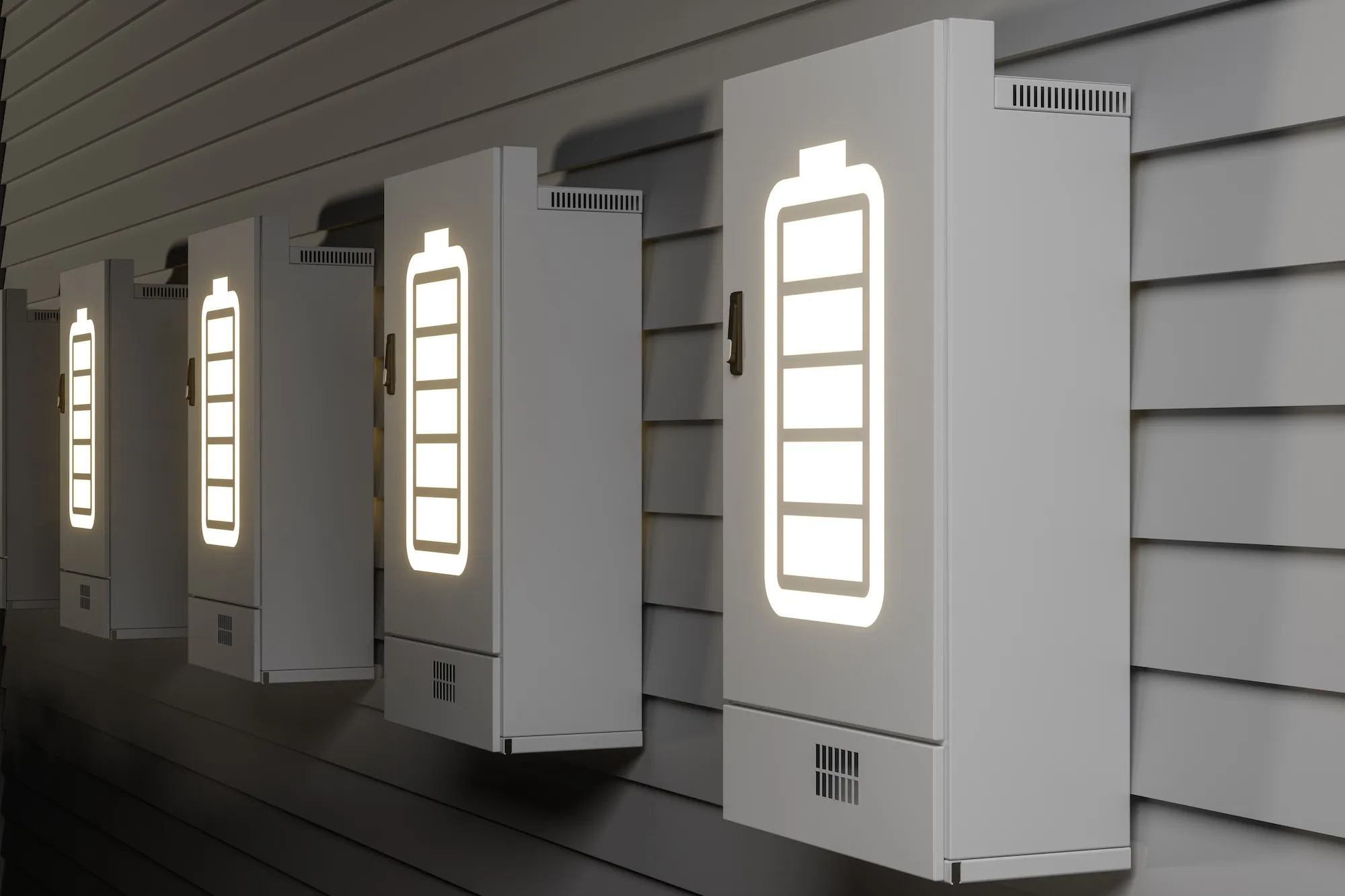
One of the most common extensions for photovoltaic systems is battery storage. Without storage, the electricity generated during the day is fed directly into the public grid or consumed immediately. In the evening and at night, when no more solar electricity is produced, grid electricity must be used again. Battery storage solves this problem by storing surplus solar electricity so that it can also be used in the evening and at night.
Advantages of a battery storage:
- Increased self-consumption: With a storage system, you make better use of the electricity you generate yourself and need to draw less electricity from the grid operator.
- Independence from the grid: In the event of power outages, you can continue to be supplied with energy thanks to the storage.
- Long-term savings: Although the purchase of a battery storage system involves additional costs, this investment often pays for itself within a few years through savings on electricity costs.
In Switzerland, battery storage is gaining increasing importance as it significantly increases the self-consumption of solar power and can shorten the payback period of the system.
2. Energy manager – Intelligent control of energy flows

An energy manager is another sensible extension that optimises the self-consumption of your photovoltaic system. This smart controller monitors electricity production and consumption in the household and ensures that energy is used efficiently. It controls, for example, when appliances such as washing machines or dishwashers are switched on, and adjusts energy consumption to solar power production.
Advantages of an energy manager:
- Automation: The energy manager automatically controls energy-intensive devices to maximise electricity consumption when sufficient solar power is available.
- Efficiency improvement: By strategically using your own solar power, grid consumption and costs are minimised.
- Simple operation: Many energy managers can be controlled via apps, enabling flexible adjustment and control of energy use.
Energy managers are particularly useful if you have several devices in your household that can be operated at different times. By intelligently controlling these devices, you can optimise your solar power usage and further reduce costs.
3. Charging station for the electric car – Solar power for sustainable mobility
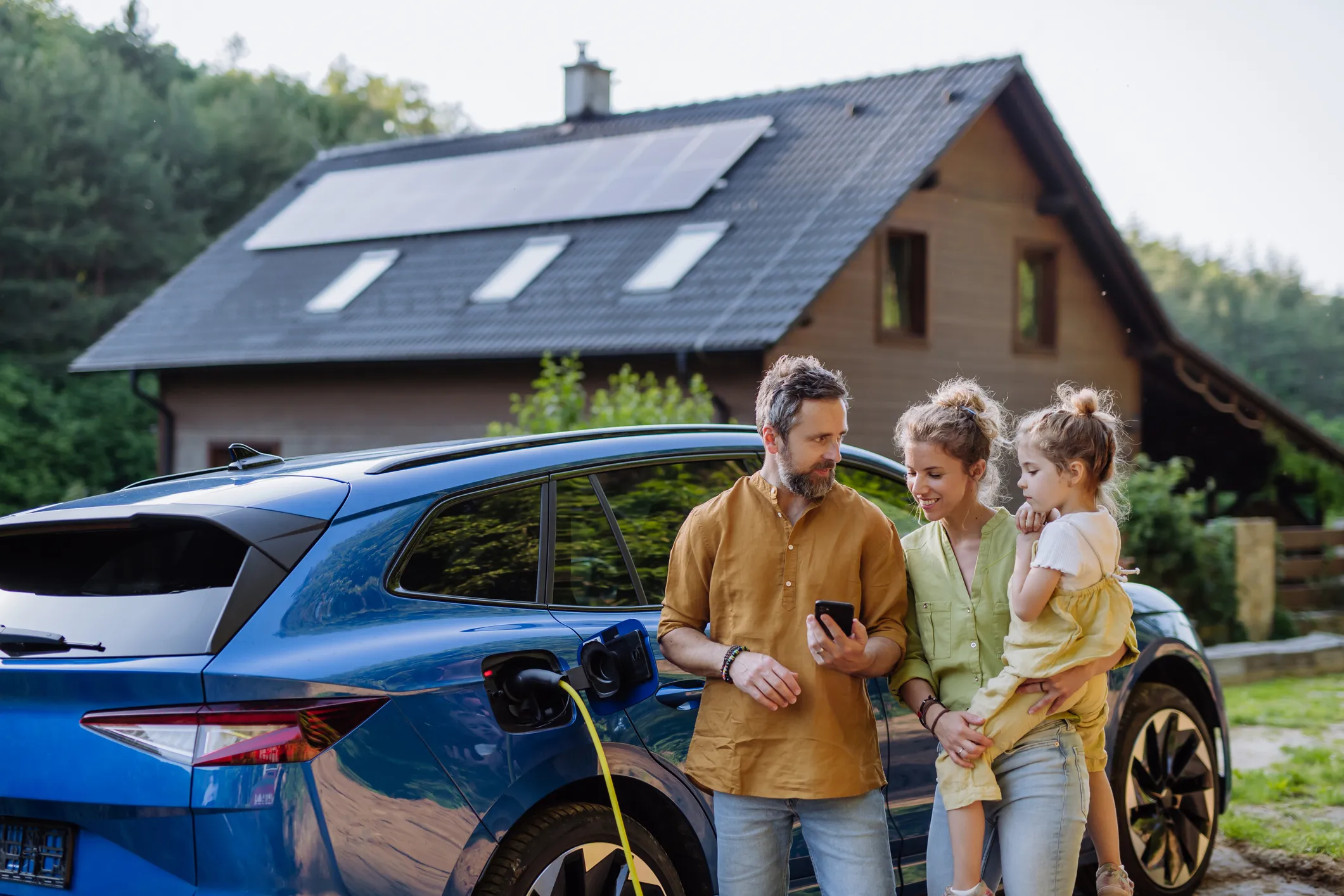
Electromobility is steadily increasing in Switzerland as well, and many homeowners with a photovoltaic system are considering installing a charging station for their electric car. A private charging station allows you to charge your electric vehicle with self-produced solar power, which is both environmentally friendly and cost-saving.
Advantages of a charging station:
- Cost efficiency: Charging an electric car with solar power is significantly cheaper than refuelling at public charging stations or charging with grid electricity.
- Sustainability: By charging with renewable energy, the CO₂ footprint of your electric car is further reduced.
- Flexibility: You can conveniently charge your electric vehicle at home without relying on public charging infrastructure.
A charging station combined with a photovoltaic system and battery storage can turn your home into a small power plant that covers both your energy and mobility needs.
4. Facade power plant – Solar energy on the house facade
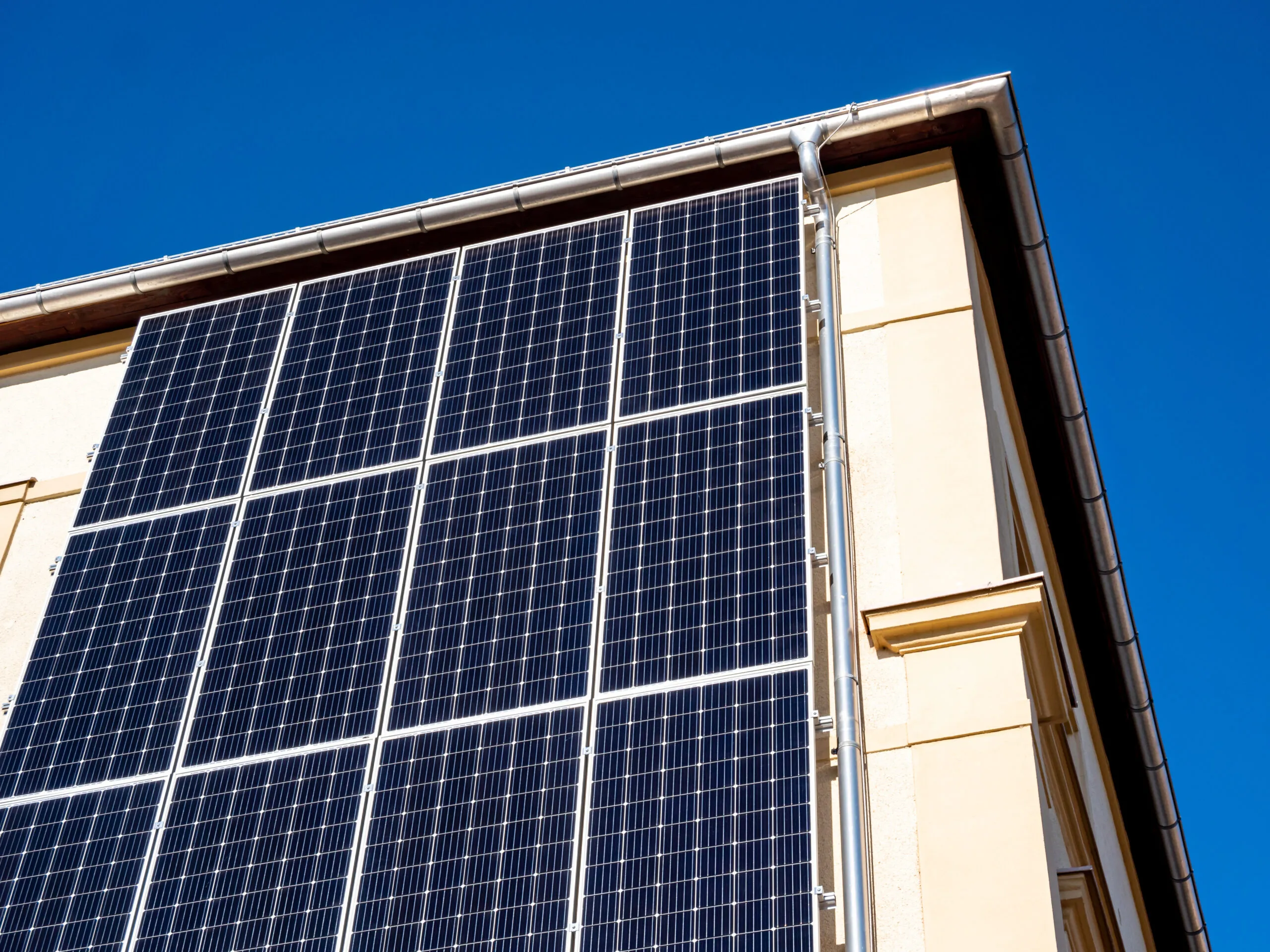
In addition to installing solar modules on the roof, there is also the option of using a building’s facade for energy generation. Facade power plants use vertically mounted solar panels to generate additional energy. This is particularly interesting in Switzerland, where roof area is limited in many urban areas or buildings are listed as historical monuments.
Advantages of a facade power plant:
- Additional energy generation: With a facade power plant, the vertical surfaces of a building can also be used to harness solar energy.
- Optical adjustments: Modern facade power plants can be aesthetically integrated into the architecture of the building and can be executed in various colours and designs.
- Expansion of usable area: With limited roof space, the facade offers an additional option for solar power production.
Facade power plants are an excellent complement to a photovoltaic system on the roof, especially for large buildings with many free facade areas.
5. Heat pump – Solar energy for heating and hot water
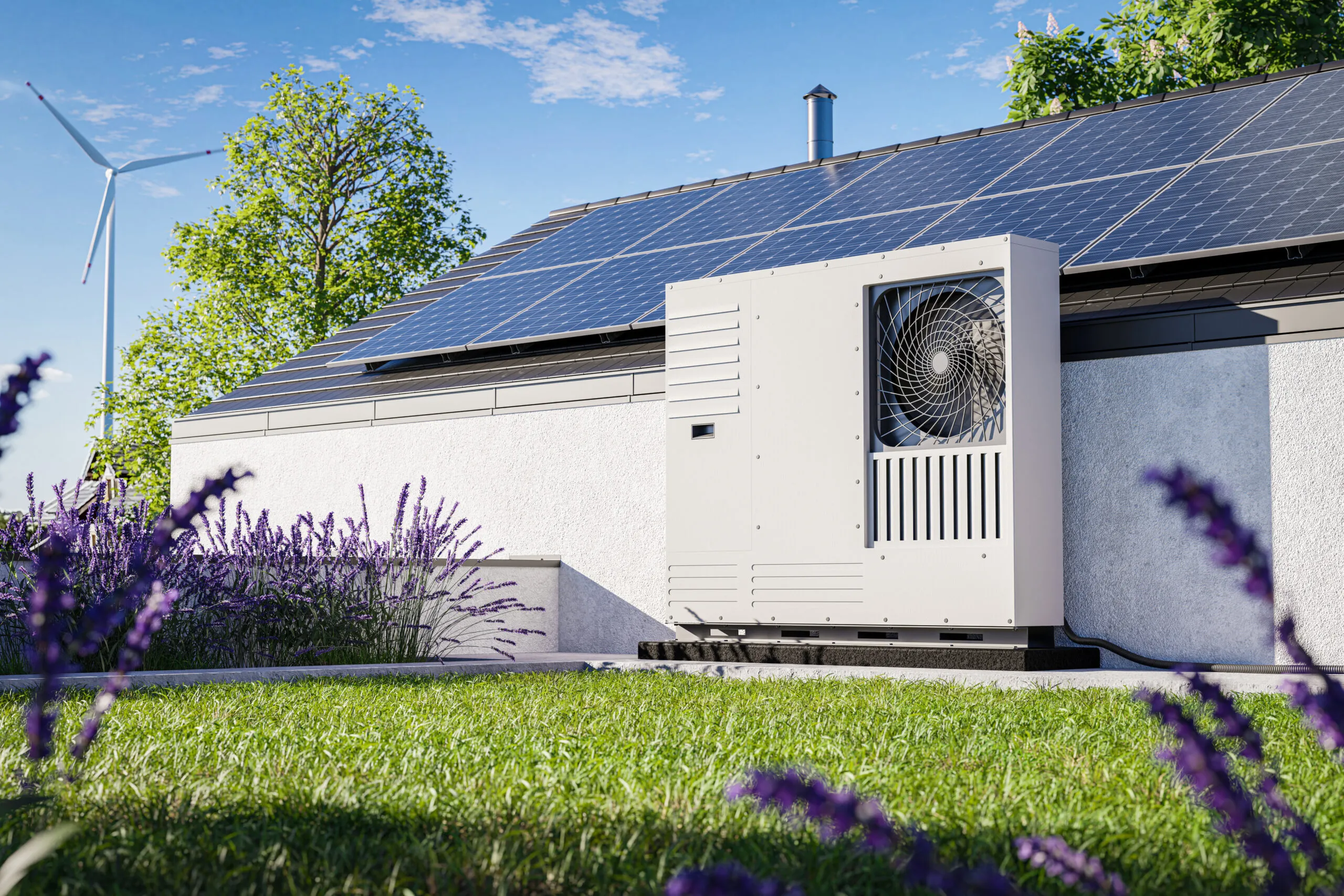
A heat pump can be used in combination with a photovoltaic system to use solar electricity for heating the house and preparing hot water. Heat pumps utilize ambient heat (from the air, ground, or water) and convert it into heating energy. If the electricity required for operation comes from your photovoltaic system, you make your home even more independent from fossil fuels.
Advantages of a heat pump:
- High energy efficiency: Heat pumps are highly efficient and use available ambient heat to heat the building.
- Full utilisation of solar power: With a heat pump, you can optimally use the generated solar power even in the colder months.
- Reduced heating costs: By using solar power for self-consumption in heating, ongoing heating costs drop significantly.
The combination of photovoltaics and a heat pump is particularly suitable for energy-efficient new builds or renovations and offers long-term savings on heating costs.
Conclusion
A photovoltaic system not only offers a sustainable way to generate electricity but can also be made more versatile and efficient through various extensions. Battery storage, energy managers, charging stations for electric vehicles, facade power plants, and heat pumps are just some of the options that increase the self-consumption of solar power and promote independence from the public grid. In Switzerland, where demand for renewable energies is continuously rising and state subsidies are available, it is worth considering these extensions to get the maximum efficiency and sustainability out of your photovoltaic system.
Average: 4.7 out of 5 stars (21 ratings)