The heat pump has become one of the most important solutions for heating replacement in Switzerland – it uses environmental heat from air, ground, or water and converts it into heating heat and hot water using electricity. This page explains the types, the typical costs, suitability for new and existing buildings, as well as the subsidy question. And it shows why the combination with photovoltaics works particularly well.
Key points at a glance
The following points summarize the most important information:
- Heat pumps use environmental heat from air, ground or water.
- In Switzerland, air-to-water heat pumps are the most widely used.
- The costs depend heavily on type, building, installation and heat distribution.
- In renovations, insulation, flow temperature and radiators determine suitability.
- Subsidies vary by canton and municipality – especially when replacing fossil fuel heating systems.
- In combination with photovoltaics, the self-consumption of solar power increases.
- Concrete figures are only provided after an individual assessment of the building.
This makes the direction clear: The specific subsidy always depends on address, system size, building type and grid operator.
- As of 13.07.2026
- Sources at the end of the article
How does a heat pump work?
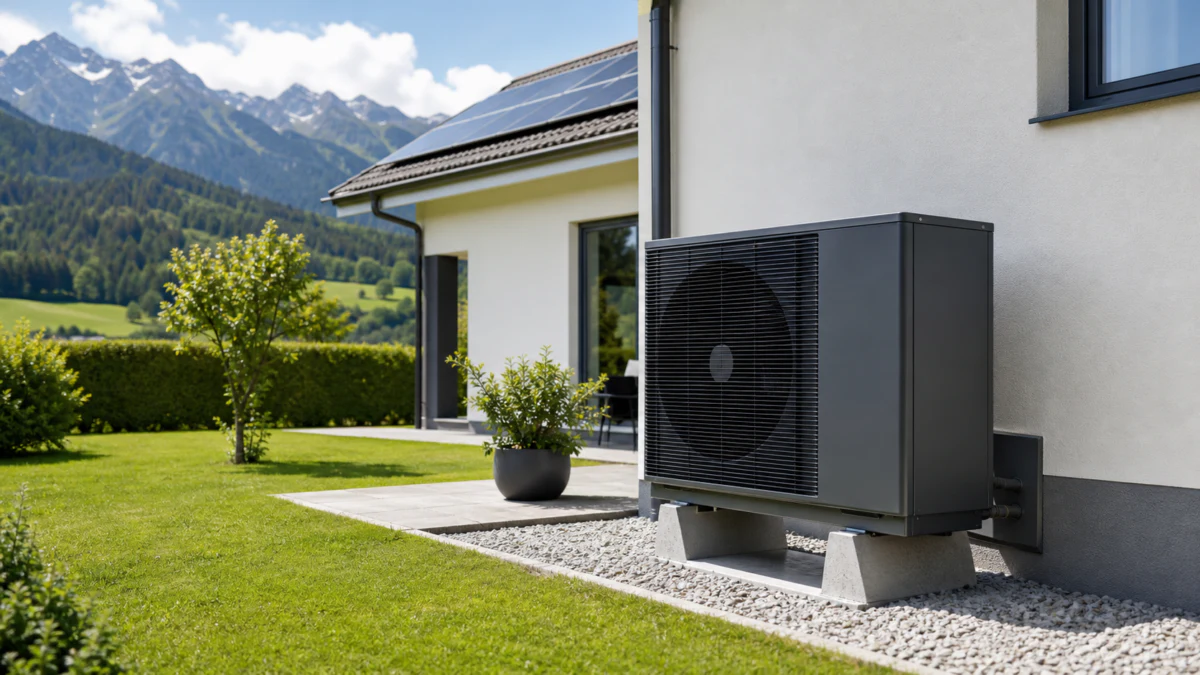
A heat pump extracts heat from the environment and raises it to a usable temperature level – based on the same principle as a refrigerator, but in reverse. In the evaporator, a refrigerant absorbs environmental heat, the compressor compresses it and thus increases the temperature, and in the condenser, the refrigerant releases the heat to the heating circuit.
For this, the heat pump requires electricity. How efficiently it operates is shown by the annual performance factor (APF): An APF of 4 means that one kilowatt-hour of electricity becomes four kilowatt-hours of heat. The lower the flow temperature of the heating system, the better the efficiency – which is why heat pumps work particularly well with underfloor heating.
What types of heat pumps are there?
The following table organises the key points of 'What types of heat pumps are there?' as follows:
| Type | Heat source | Advantage | What to look for? |
|---|---|---|---|
| Air-to-water heat pump | Outdoor air | Widespread, simpler installation, no drilling required | Sound insulation, efficiency on very cold days |
| Brine-to-water heat pump | Ground (borehole) | High efficiency, constant source | Drilling and permit, higher investment |
| Water-to-water heat pump | Groundwater | Very efficient | Location, permit, water quality |
| Domestic hot water heat pump | indoor/outdoor air | Affordable hot water solution | For hot water only, not for heating |
The overview serves as a guide and should be checked against your specific project conditions.
What does a heat pump cost in Switzerland?
The following values are rough guidelines for a single-family home and do not replace a quote. Depending on the building, heating output, hot water demand, sound insulation, installation effort, permit, ground heat exchanger and subsidies, the actual costs may differ significantly:
| Heat pump type | Reference value for single-family home |
|---|---|
| Air-to-water heat pump | approx. CHF 45’000–60’000 |
| Brine-to-water heat pump (ground probe) | approx. CHF 55’000–80’000 |
| Water-to-water heat pump | approx. CHF 60’000–85’000 |
The table serves only as an initial orientation. When replacing an oil or gas heating system, dismantling and tank disposal may additionally be required depending on the initial situation.
New build or renovation: When is a heat pump worthwhile?
The most important situations can be classified as follows:
| Situation | Assessment |
|---|---|
| New build | Very predictable, low flow temperatures |
| well-insulated old building | often well suited |
| Unrenovated old building | Check more closely – insulate first if necessary |
| underfloor heating | Ideal due to low supply temperature |
| Old radiators | Check supply temperature, replace individual units if necessary |
| Replacement of oil/gas heating | Often sensible, check for subsidy |
The central question in renovations: Can the building cope with flow temperatures of approximately 35–50 °C? If yes, the heat pump operates efficiently. If not, it is worth first looking at insulation or larger radiators.
What to consider in planning?
The following list summarises the key points on what to consider during planning:
- Building’s heating demand (if applicable, GEAK)
- Flow temperature of the existing system
- Condition of the insulation
- Radiators or underfloor heating
- hot water demand
- Location of the outdoor unit
- Sound insulation towards neighbours
- Permits (especially for boreholes)
- Subsidy programmes and deadlines
- Power connection and protection
- Is a photovoltaic system already installed or planned?
- Service and maintenance
For the binding assessment, the specific situation of the building and the practice of the responsible authority ultimately count.
How do subsidies for heat pumps work in Switzerland?
Heat pumps are subsidised at cantonal and municipal level – particularly when replacing a fossil fuel heating system. The programmes and contributions vary greatly; some cantons additionally subsidise GEAK advice or require it as a prerequisite. Two rules apply almost everywhere:
- The application must be submitted before implementation.
- There is no blanket subsidy guarantee – budgets and conditions change.
The location-specific overview is provided by Energiefranken.ch.
How can a heat pump and photovoltaics be combined?
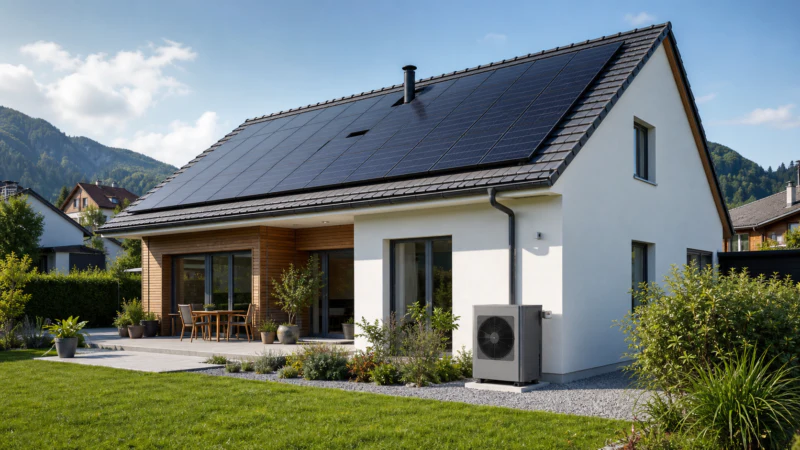
Heat pump and photovoltaics complement each other economically: the PV system supplies electricity, the heat pump consumes it – thereby increasing self-consumption, the most important economic lever of a solar system. Hot water can be generated specifically during the day when the sun is shining. In winter, when heating demand is at its highest, grid electricity remains mostly indispensable – the combination does not replace the grid, it reduces consumption from it.
How the interaction works in detail can be read on the page Solar system with heat pump; the basics of solar electricity on the page Solar electricity.
What mistakes are commonly made with heat pumps?
The following list summarises the key points on What errors frequently occur with heat pumps?:
- Oversizing the heat pump – it then cycles frequently and wears out faster.
- Ignore the condition of the building and overestimate the efficiency.
- Underestimate the flow temperature of the existing heating distribution system.
- Do not consider the noise protection of the outdoor unit.
- Submitting the subsidy application too late – after construction begins, there is usually nothing left.
- Compare only the acquisition costs instead of the full costs over the lifetime.
For the binding assessment, the specific situation of the building and the practice of the responsible authority ultimately count.
solar-guide.ch recommends: Plan the heat pump and photovoltaic system as an integrated whole if both are planned – the combination increases self-consumption and improves the economic viability of both investments. Have the heating demand calculated accurately rather than estimating the output, and submit subsidy applications consistently before implementation.
How can heat pump quotes be compared sensibly?
A good heat pump quote includes:
- Heat pump type with manufacturer and model
- Heating output, matched to the heat demand
- Hot water concept
- Storage (size and type)
- Installation and electrical work
- Removal of the old heating system
- Sound insulation measures
- Permits (who is taking care of them?)
- Subsidy assumptions
- Service and maintenance
- Schedule
Would you like to have a heat pump assessed for your home? Through waermepumpen-guide.ch, you can request suitable specialist installers free of charge and without obligation, and compare individual quotes.
Request free and non-binding quotes for heat pumps
Frequently asked questions and answers
Which heat pump is most common in Switzerland?
The air-to-water heat pump. It requires no drilling, is relatively easy to install, and is suitable for most single-family homes.
What does a heat pump for a single-family home cost?
Guideline values are: air-to-water approx. CHF 45’000–60’000, brine-to-water with borehole approx. CHF 55’000–80’000, water-to-water approx. CHF 60’000–85’000 – each including installation and storage. The actual costs depend on the building.
Which heat pump is suitable for an older building?
This depends on insulation and flow temperature. Well-insulated older buildings with low flow temperatures are often well suited; for unsanitized buildings, the heat demand should be checked first and insulation added if necessary.
Are there subsidies for heat pumps?
Yes, at cantonal and municipal level – especially when replacing fossil fuel heating systems. Contributions and conditions vary greatly; the application must be submitted before implementation. Overview: Energiefranken.
Is a heat pump with photovoltaics worthwhile?
The combination can be economically attractive: the heat pump increases the self-consumption of the solar power, and hot water can be generated during the day with solar power. Details: Solar system with heat pump.
Does a heat pump require a permit?
Depending on the type and location. Ground-source and groundwater heat pumps require a permit; for air-water units, notification or permit requirements apply depending on the canton, particularly due to noise protection. Your specialist installer is familiar with the local requirements.
Sources and further information
The following official bodies provide further information:
- Federal Office of Energy: Ambient heat and heat pumps
- Energiefranken: Subsidies for energy projects
Average: 4.7 out of 5 stars (10 ratings)